Family Owned & Operated
Licensed & Certified
Free Estimates


Bay Area Vinyl Siding
Upgrade your curb appeal with Bay Area Siding Company. Our vinyl siding services offer durability, ease of maintenance, and a sleek look. Customize your home today!


Get Started Today & Enjoy Savings Up to $1,500!
Request Free Pricing Today for Your Exterior Renovation Needs!


Vinyl Siding for Bay Area Homes
Vinyl is a good fit for some Bay Area homes and the wrong one for others, and it helps to know which yours is before you get quotes.
Bay Area Siding Company installs standard and insulated vinyl siding across the SF Bay Area. We'll give you a straight answer on whether it suits your house, your parcel, and your budget, and we'll say so if another material makes more sense.
Want to know whether vinyl makes sense for your home? Request an estimate and we'll walk the walls with you.
Call (415) 619-5167Is vinyl the right call for your home?
Vinyl's color runs through the material, so there is no repainting cycle. Upkeep is mostly an occasional rinse to remove dirt, pollen, and salt film. If a lower upfront cost and less long-term maintenance are your top priorities, vinyl belongs on your shortlist.
Because the color is through-body, the darkest shades are limited in many lines. Up close, vinyl reads as vinyl, not as painted wood or fiber cement. On a historic Victorian or a home where the look is the whole point, fiber cement or engineered wood may serve you better.
Vinyl softens at much lower temperatures than masonry or fiber cement. Under sustained heat it can fade, and panels can warp or distort. This includes spots where sunlight reflects off a neighbor's low-E windows. On hot inland walls, choose a line and color rated for that exposure, and plan fastening and clearances carefully.
Vinyl is a plastic, and in wildland-urban interface areas, California's Chapter 7A requirements for exterior wall coverings can narrow your choices. Check Cal Fire's fire hazard severity zone maps first. We confirm current requirements with your local building department before recommending a material.
Vinyl vs. fiber cement vs. engineered wood
| Consideration | Vinyl (standard & insulated) | Fiber cement | Engineered wood (e.g., LP SmartSide) |
|---|---|---|---|
| Upfront cost | Generally the most budget-friendly | Higher; heavier material and more labor | Typically between the two |
| Maintenance | No repainting; occasional washing | Periodic repainting; factory finishes extend the interval | Periodic repainting; cut edges and clearances matter |
| Appearance | Wide range of colors and profiles; less premium look up close | Convincing painted-wood look; crisp lines | Real-wood texture and appearance |
| Heat & sun | Can fade or distort under extreme heat | Dimensionally stable; paint may eventually fade | Stable when finished and maintained |
| Impact | Flexes; insulated vinyl resists dents better | Hard surface; can chip | Good impact resistance |
| Weight & handling | Very light | Heavy; specialized cutting and dust control | Lighter than fiber cement; easy to work |
| Fire posture | Combustible; may be limited on WUI parcels | Noncombustible; often chosen in fire zones | Treated product; confirm acceptance per parcel |
| Manufacturer warranty | Strong limited warranties, varying by line | James Hardie: transferable 30-year substrate and 15-year ColorPlus finish limited warranties | Manufacturer limited warranty |
Insulated (foam-backed) vinyl: what it adds
Insulated vinyl bonds a contoured rigid foam backer to the back of each panel. The foam fills the hollow space behind the profile, and that changes how the siding performs. The panel becomes much stiffer, so walls look flatter and straighter, with less of the waviness standard vinyl can show over uneven sheathing. It also resists dents from a stray ball or a ladder better. The foam adds a continuous layer over the studs, which reduces heat loss through the framing and can make rooms feel more even.
Keep expectations realistic. Insulated vinyl improves the wall assembly, but it does not replace cavity insulation or fix air leaks at windows and penetrations. The thicker panels also need deeper accessories: J-channel, window and door trim, and corner posts sized for the added depth. We plan that trim before the first course goes up so the window returns don't look undersized.
Insulated vinyl makes the most sense on homes with little or no wall insulation, on walls exposed to wind, and wherever you want a flatter, more solid feel from vinyl. We install lines such as Alside, and we'll show you standard and insulated samples side by side so you can see and feel the difference.
What drives the cost of a vinyl siding project
- Standard vs. insulated panels: foam-backed vinyl costs more per square and requires deeper trim accessories.
- Tear-off and disposal: the type and number of existing siding layers affect removal labor and haul-away.
- Sheathing, WRB, and flashing repairs: damage found once the old siding comes off must be corrected before new siding goes on.
- Wall complexity: gables, bays, dormers, second-story access, and many windows and penetrations add labor and trim.
- Profile, color, and trim package: specialty profiles, shakes, and heat-rated colors vary by line.
- Permits and site conditions: local permit scope, hillside access, and tight lot lines all factor in.
Vinyl in Bay Area conditions
Near the coast, the marine layer and salt air are easy on vinyl itself, since there is no paint to peel. The real concern is moisture behind the siding, so the WRB and window flashing do the heavy lifting. Inland valleys bring stronger UV and summer heat, which is where color choice, heat-rated lines, and correct fastening matter most. Vinyl's light weight and flexible interlocks tolerate normal seismic movement well. It is common in mid-century tract neighborhoods, but it's often a poor aesthetic match for Victorians and Eichlers, and on stucco homes the decision usually involves more than the cladding.
Our vinyl installation process
- Consultation and estimate. We review your walls, sun exposure, and fire-zone status, then recommend standard vinyl, insulated vinyl, or another material in a clear written scope.
- Tear-off to the substrate. We remove the existing siding down to the sheathing so the WRB and flashing can actually be inspected, rather than covered over.
- Inspect sheathing, WRB, and flashing. A common finding when older siding comes off is torn or brittle building paper and window flashing that was never lapped correctly, with soft sheathing below. We document what we find and discuss it with you.
- Corrections and repairs. Damaged sheathing is replaced, and permit and inspection needs are confirmed with the AHJ.
- New WRB and flashing details. The WRB is lapped shingle-style, window and door flashing is integrated with it so water sheds outward, and kick-out flashing goes in where roofs meet walls.
- Installation to manufacturer spec. Fasteners go in the center of the nailing slots and are left slightly loose so panels can expand and contract. We leave gaps at channels and trim, and keep required clearances at grade and rooflines.
- Final walkthrough. We walk every elevation with you, check trim and caulk joints, and clean up the site.
Why homeowners choose Bay Area Siding Company
We're a Larkspur-based contractor serving the Bay Area. Our focus is the whole wall assembly, not just the panels you see.
Every job starts with the sheathing, WRB, and flashing, because that is what keeps water out of the wall.
If vinyl isn't right for your home, parcel, or goals, we'll tell you and explain the alternatives fairly.
You get a written scope, installation to manufacturer spec, and a direct number: (415) 619-5167.
Other services we offer
Comparing options or planning a full exterior project? Start here.
Vinyl Siding FAQ
Can vinyl go right over my existing siding?
Sometimes that's physically possible, but we generally recommend a tear-off. Covering old siding hides the condition of the sheathing, WRB, and flashing. It can also create an uneven base that shows through, especially with standard vinyl.
Can I use vinyl siding in a Bay Area fire hazard zone?
It depends on your parcel. Chapter 7A applies to specific exterior assemblies on properties in designated fire hazard areas, and vinyl is combustible. We check Cal Fire's maps and confirm current requirements with your building department before recommending a material.
Will vinyl fade in the East Bay or South Bay heat?
All vinyl fades somewhat over time, and it happens faster on hot, sun-facing walls. Choosing a heat-rated line, a lighter color, and correct fastening reduces fading and distortion. We'll point out any walls where reflected sunlight could be a concern.
Is insulated vinyl worth it?
If your walls are poorly insulated, or you want a flatter, more dent-resistant finish, it's often worth considering. If budget is the priority and your walls are already well insulated, standard vinyl installed correctly is a reasonable choice.
Get an honest answer on vinyl for your home. Schedule a consultation with Bay Area Siding Company.
Call (415) 619-5167
*Offer expires September 30, 2026
Try Our 3D Home Design Visualizer!
Excited to explore new possibilities for your home? Snap a photo to kickstart your journey with our online design tool or get inspired by our sample homes.
Start Designing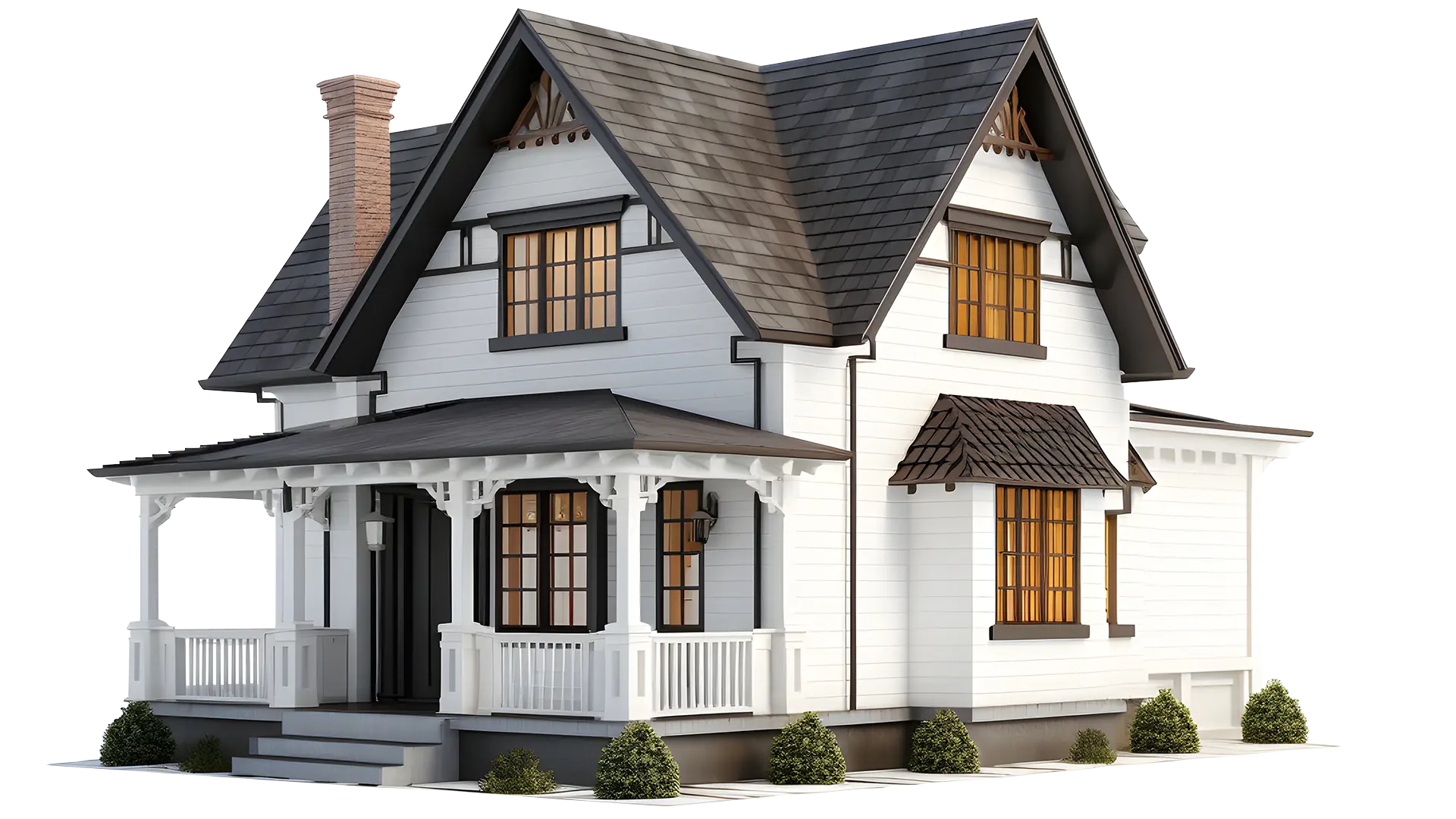
Why Choose Us?
Top Rated Siding & Window Experts
- FREE, Detailed Estimates
Receive clear, detailed quotes on-site, with no hidden fees.
- Fire Resistant Products
Enjoy peace of mind with quality materials like James Hardie siding and Anlin Windows.
- Local, Family-Owned Company
Decades of unparalleled expertise. No subcontractors!
- Licensed, Certified & Insured
We are fully licensed and certified, guaranteeing top-notch craftsmanship.
- Old-school Professionalism
Thorough cleanup and dependable follow-through with every siding and window project.


Essential Soffit Repair Tips for Homeowners
February 14th, 2026 by Daniel

Understanding Soffit Vents: Essential for Your Home
February 5th, 2026 by Daniel

Understanding California Title 24 Compliance Requirements
November 28th, 2025 by Daniel

OSB Sheathing: A Comprehensive Guide and Benefits
June 23rd, 2025 by Eugene Hampton

Vinyl Shingle Siding: A Comprehensive Guide
May 5th, 2025 by Eugene Hampton

Everything You Need to Know About Vertical Vinyl Siding
March 10th, 2025 by Eugene Hampton
- Alamo
- Albany
- American Canyon
- Angels Camp
- Antioch
- Apple Hill
- Arnold
- Belmont
- Benicia
- Berkeley
- Blackhawk
- Bodega Bay
- Brentwood
- Burlingame
- Calistoga
- Cambrian Park
- Campbell
- Castro Valley
- Chico
- Clayton
- Clear Lake
- Concord
- Cordelia
- Corte Madera
- Cotati
- Cupertino
- Daly City
- Danville
- Discovery Bay
- Dixon
- Dublin
- East Bay
- El Cerrito
- El Sobrante
- Emeryville
- Fairfax
- Fairfield
- Foster City
- Fremont
- Galt
- Gilroy
- Grass Valley
- Half Moon Bay
- Hayward
- Hercules
- Hidden Valley Lake
- Isleton
- Jackson
- Kentfield
- Lafayette
- Lakeport
- Larkspur
- Livermore
- Los Altos
- Los Gatos
- Lower Lake
- Manteca
- Marin City
- Martinez
- Menlo Park
- Mill Valley
- Millbrae
- Milpitas
- Moraga
- Morgan Hill
- Mountain View
- Murphys
- Napa
- North Bay
- Novato
- Oakland
- Oakley
- Orinda
- Pacifica
- Palo Alto
- Paradise
- Petaluma
- Piedmont
- Pinole
- Pittsburg
- Pleasant Hill
- Pleasanton
- Pollock Pines
- Rancho Calaveras
- Redwood City
- Richmond
- Rio Vista
- Rodeo
- Rohnert Park
- Roseland
- San Andreas
- San Anselmo
- San Bruno
- San Carlos
- San Jose
- San Leandro
- San Mateo
- San Pablo
- San Rafael
- San Ramon
- Santa Clara
- Santa Cruz
- Santa Rosa
- Saratoga
- Sausalito
- Scotts Valley
- Sebastopol
- Sonoma
- South Bay
- South Lake Tahoe
- South San Francisco
- St. Helena
- Stanford
- Stockton
- Suisun City
- Sunnyvale
- Sutter Creek
- Tiburon
- Tracy
- Truckee
- Union City
- Vacaville
- Vallejo
- Valley Springs
- Walnut Creek
- Windsor
- Yountville


Protect and Beautify Your Home with Bay Area Vinyl Siding!
Learn more about Vinyl Siding and how we can help. Contact us today!
Get StartedWhy Us
- Free Quotes, Competitive Pricing
- On-Time Service
- Local, Family-Owned & Operated
- Reliable, Experienced, Certified
- Licensed & Certified
- Elite Preferred Contractor
- Family Owned & Operated
Replacement Windows
© 2026 Bay Area Siding Company, Inc. All Rights Reserved.Full-Service Siding & Window Experts in Bay Area. Bay Area Siding Company rated 5 / 5 based on 150 reviews.