

Vinyl is usually the lowest-cost siding to install, and with reasonable care it lasts for decades, but in California heat and wildfire rules limit where it makes sense. Remodeling magazine's 2025 Cost vs. Value report puts a 1,250-square-foot vinyl re-side at $17,950 nationally, and HomeAdvisor's 2026 cost guide lists vinyl at $3 to $12 per square foot. Bay Area prices typically run higher than national averages. InterNACHI's life expectancy chart lists vinyl siding at 60 years with regular maintenance, though heat, sun and installation quality decide how it actually ages.
Standard vs insulated vinyl at a glance
| Standard (hollow-back) vinyl | Insulated vinyl | |
|---|---|---|
| What it is | Extruded PVC panels with an open back | Vinyl panels with rigid foam (usually expanded polystyrene) fitted and bonded to the back |
| Thermal value | Very little on its own | Must test at R-2.0 or higher to meet ASTM D7793, the standard for insulated vinyl siding |
| Feel on the wall | Can look wavy over uneven walls; dents and flexes more | Stiffer and flatter; the foam supports the face |
| Relative cost | Lowest | Higher than standard vinyl |
| Fire | Combustible | Combustible (vinyl and foam) |
| Example products | Most builder-grade lap profiles | Alside Prodigy and similar foam-backed lines |
What drives vinyl siding cost
The material is only part of the price. On most re-sides, labor, tear-off and wall repairs add up to more than the vinyl itself. The main drivers:
- Product grade and profile. Thicker panels, deeper profiles, wood-grain textures, shakes and board and batten cost more than basic lap. Insulated panels cost more again.
- Accessories and trim. Vinyl needs corner posts, J-channel around every window and door, starter strip, mounting blocks for lights and outlets, and soffit and fascia pieces. A house with many openings and corners uses a lot of trim.
- Tear-off and wall condition. Vinyl sits on the wall with a drainage gap behind it, so the weather barrier behind it does most of the waterproofing. Removing old siding usually means a new barrier and some sheathing repair, and that work costs the same no matter which siding goes back on.
- Stories and access. Two-story walls, hillside lots and tight side yards need more staging and time.
- Window flashing. If windows are being replaced at the same time, they can be flashed properly to the new barrier before the vinyl goes on.
Our siding replacement cost guide ranks the drivers that apply to every material and explains how to compare bids.
What insulated vinyl's foam backing actually does
Insulated vinyl siding is vinyl with a contoured layer of rigid foam attached to the back. The foam fills the hollow space behind each panel and covers the wall in a continuous layer. That has three effects:
- It adds some insulation outside the studs. Wood studs conduct heat more than the insulation between them. A continuous layer on the outside reduces that heat loss through the framing, which is why the industry describes insulated siding as reducing thermal bridging.
- It stiffens the panel. The foam supports the vinyl face, so the wall looks flatter and panels resist dents better than hollow-back vinyl.
- It can quiet the wall slightly. Manufacturers market sound reduction; the effect depends on the rest of the wall.
About R-value claims
ASTM D7793, the specification for insulated vinyl siding, requires a product to demonstrate a thermal value of R-2.0 or greater. Beyond that minimum, manufacturers publish their own numbers, and some describe foam thickness instead of a tested R-value. Alside, for example, describes Prodigy's foam as nominal 1½-inch EPS. When you compare products, ask for the tested R-value and the test standard, not the foam thickness.
Keep the numbers in proportion. A 2×4 wall cavity filled with batt insulation is typically rated around R-13, so insulated siding adds a modest amount on top. In the Bay Area's mild climate, the payback from that extra insulation alone is limited. The stronger reasons to choose insulated vinyl are a flatter, stiffer wall and better impact resistance.
How long vinyl siding lasts, and what shortens it
Vinyl does not rot, and insects don't eat it. What ends its life early is usually one of these:
- Concentrated heat. Vinyl softens at temperatures far below what would make it burn. The Vinyl Siding Institute reports that sunlight reflected and concentrated by double-pane windows, especially low-E glass that has bowed slightly inward, can raise siding temperatures enough to distort it. Barbecue grills placed too close to the wall do the same. Alside's warranty, for example, excludes distortion from reflection off windows and heat above 160°F on the panel surface.
- Sun and color. Ultraviolet light fades vinyl over time. Darker colors absorb more heat. Manufacturers' fade warranties define how much change counts as excessive, so read that clause before choosing a dark color for a south- or west-facing wall in Concord, Livermore or San Jose.
- Installation. Vinyl expands and contracts with temperature. It has to be nailed loosely in the center of the slots with room at the ends, or it buckles. Panels nailed tight are the most common cause of waves and popped joints.
- Impact and maintenance. Cracked or dented panels can be replaced individually if the profile and color are still available. Annual washing keeps mildew from building up on shaded and foggy walls, which is common near the coast in Pacifica and Daly City.
Most vinyl siding is sold with a lifetime limited warranty for the original owner, with reduced or transferable terms after a sale. Read the exclusions: heat, reflection, painting and improper installation are common ones. If you are thinking about painting faded vinyl rather than replacing it, read can you paint vinyl siding? first.
Vinyl and wildfire rules in California
Vinyl is combustible. The University of California's fire advisors note that vinyl won't keep burning once other fuels nearby are consumed, but that a vinyl-clad wall's fire performance depends largely on the sheathing behind it. In practice, softened vinyl can sag and fall away, leaving the sheathing exposed.
California's wildfire-zone building rules accept exterior walls that are noncombustible, ignition-resistant, heavy timber, or part of a wall assembly that passes the State Fire Marshal's flame test. Vinyl is not noncombustible or ignition-resistant on its own, so on a lot in a Fire Hazard Severity Zone it would have to qualify as part of a tested assembly, typically with specific sheathing behind it. UC's guidance also recommends noncombustible or ignition-resistant siding for homes within 30 feet of a neighboring house. If your home is in the Marin hills, the Oakland or Berkeley hills, or another mapped zone, confirm with your building department before choosing vinyl. Our fiber cement vs vinyl comparison covers the noncombustible alternative.
When vinyl makes sense
- Good fit: lots outside fire hazard zones, rental and multifamily buildings where cost and low maintenance lead the decision, foggy coastal neighborhoods where wood rots and paint fails, and owners who want a finish that never needs painting.
- Think twice: houses in or near a Fire Hazard Severity Zone, walls close to a neighbor's large windows, hot inland walls where you want a dark color, and historic districts with material rules.
- Choose insulated vinyl if you want the flattest, most dent-resistant vinyl wall, especially over older walls that are not perfectly straight.
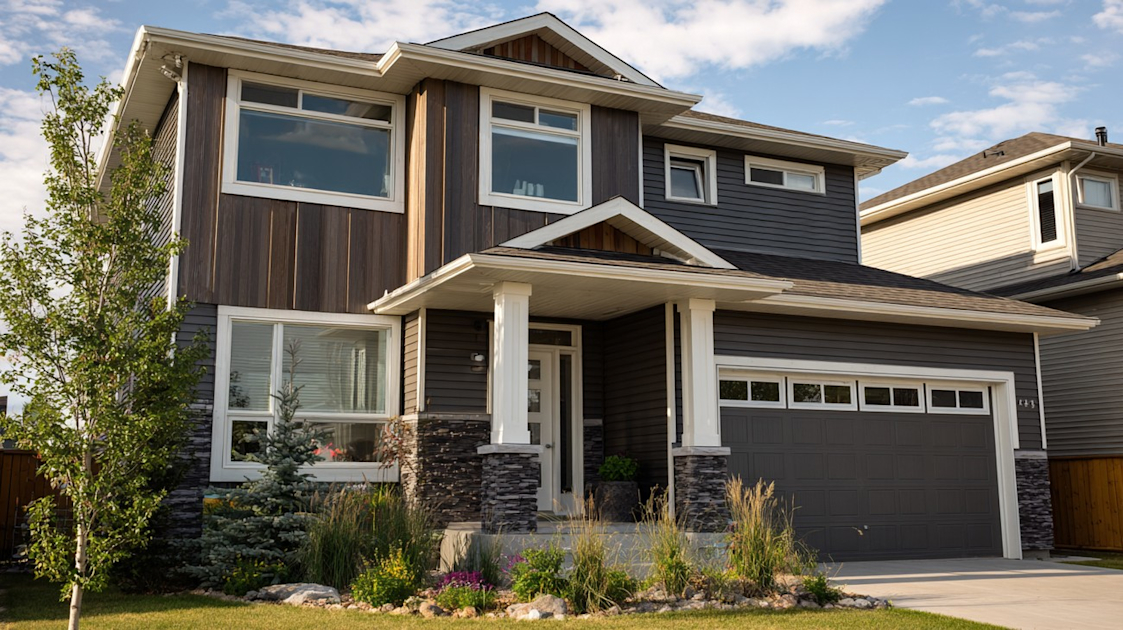
You can see vinyl on real Bay Area houses in our Daly City Prodigy vinyl re-side and our Hayward Alside Prodigy project. For a number on your house, see our vinyl siding page and ask for a free written estimate.
Frequently asked questions
How much does vinyl siding cost?
Remodeling magazine's 2025 Cost vs. Value report puts a 1,250-square-foot vinyl re-side at $17,950 nationally. HomeAdvisor's 2026 guide lists $3 to $12 per square foot. Bay Area costs typically run higher, and tear-off, wall repairs and trim change the total more than the panel grade does.
How long does vinyl siding last?
InterNACHI's life expectancy chart lists vinyl siding at 60 years with regular maintenance. In practice, heat distortion, fading and poor installation are what usually end its life early, and most manufacturers offer a lifetime limited warranty for the original owner.
Is insulated vinyl siding worth it?
It costs more than standard vinyl and must test at R-2.0 or higher under ASTM D7793. In the Bay Area's mild climate the energy savings alone are modest. Its stronger benefits are a stiffer, flatter wall and better resistance to dents.
Can vinyl siding be used in a California fire zone?
Vinyl is combustible, so on a lot in a Fire Hazard Severity Zone it generally has to be part of a wall assembly that passes the State Fire Marshal's test, usually with specific sheathing behind it. Confirm with your local building department before choosing it.
Why does vinyl siding warp?
The usual causes are concentrated reflected sunlight from nearby windows, heat from grills, painting it a darker color than the original, and panels nailed too tightly to expand. The first three are typically excluded from manufacturers' warranties.
Sources
The information provided here is intended for general reference and should not be considered professional advice. Before starting any project, consult a licensed contractor. Product features, specifications, and warranties may have been updated since this was published. Any mention of brands or products reflects personal opinion and does not constitute an endorsement or warranty.