
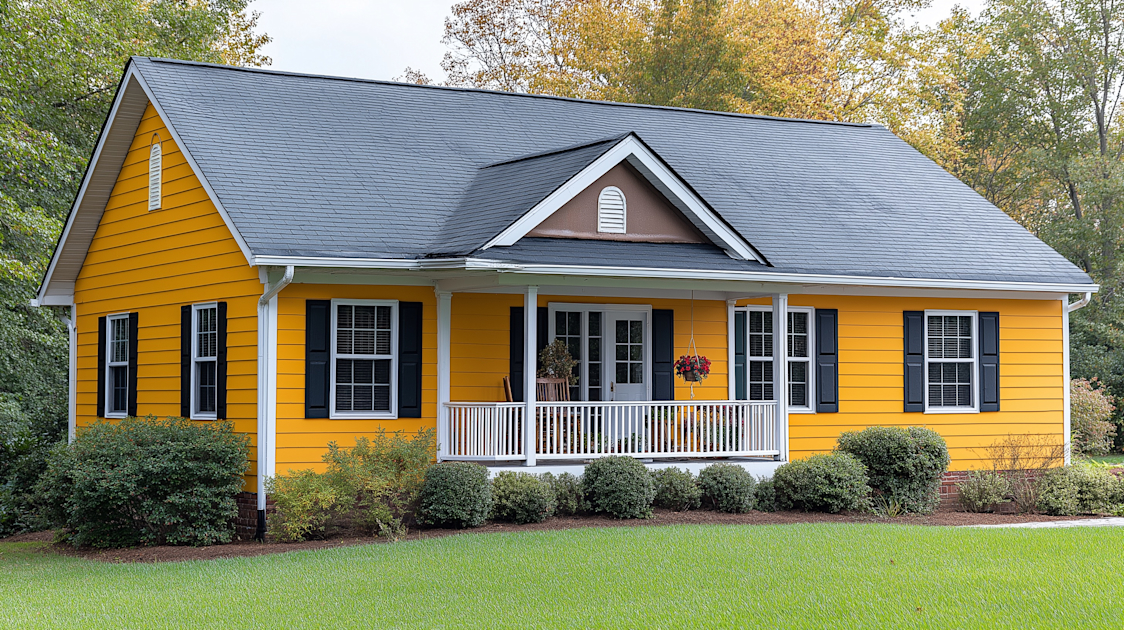


Yes, you can paint vinyl siding if you use an exterior acrylic latex paint and choose a color no darker than the original, or a color from a vinyl-safe palette made for the purpose. Darker paint absorbs more sun heat, and vinyl that gets too hot expands and warps. Before you paint, check your siding warranty: many manufacturers, including Alside, exclude siding that has been painted over the factory finish. Painting works well on sound, faded vinyl. It won't fix panels that are already warped, cracked or loose.
Painting vs replacing faded vinyl
| Paint the vinyl | Replace the siding | |
|---|---|---|
| Upfront cost | Lower | Higher |
| Color choice | Limited to colors no darker than the original, or a vinyl-safe palette | Any color the product line offers, including factory dark colors made for heat |
| Fixes warped or cracked panels | No | Yes |
| Siding warranty | Often voided by painting | New product warranty |
| Future maintenance | Repainting on a normal exterior paint cycle | Washing; no painting |
| Wall behind | Not inspected | Sheathing and weather barrier exposed and repaired |
Why dark paint warps vinyl
Vinyl siding is designed to move. Each panel expands and contracts with temperature and slides in its nailing slots. Its factory color is part of that design: a manufacturer that offers a dark color formulates and tests it for the heat it will absorb.
When vinyl is repainted darker than its original color, the surface runs hotter in the sun. Sherwin-Williams explains that the dark paint absorbs heat and passes it to the vinyl, which can expand beyond the point where it recovers its shape. The result is wavy, bowed or buckled panels, usually on south- and west-facing walls. Vinyl is also sensitive to other heat sources. Alside's warranty, for example, excludes damage from heat above 160°F on the siding surface and from sunlight reflected off windows.
In the Bay Area, that risk is highest on sunny inland walls in places like Concord, Livermore and San Jose. Foggy coastal walls run cooler, but they collect more mildew, which affects prep rather than color choice.
Vinyl-safe paint colors
Some paint makers publish color palettes meant for vinyl. Sherwin-Williams' VinylSafe program is one example: it offers 100 colors, including a limited selection of darker colors formulated to resist warping or buckling when applied to sound, stable vinyl siding. The colors are available in Sherwin-Williams exterior lines such as SuperPaint and Duration. Outside a program like this, Sherwin-Williams' guidance is simple: don't paint vinyl siding darker than its original color.
Paint makers describe how light or dark a color is with its light reflectance value (LRV). A higher LRV reflects more light and absorbs less heat. If you are choosing a color outside a vinyl-safe palette, compare the LRV of the new color with your siding's original color and stay at or above it. Our guide to siding colors covers how colors read on Bay Area houses.
What painting does to the warranty
Check before you paint. Alside's vinyl siding warranty states that it does not apply to products that have been painted, varnished or similarly coated over the manufacturer's original finish unless Alside authorizes the coating. Other manufacturers' warranties can contain similar exclusions. If your siding is fairly new, painting it can give up years of coverage; if it is 25 years old and faded, the trade-off may be worth it. The paint itself will carry its own warranty, with its own conditions on surface prep and color.
How to prep and paint vinyl siding
- Repair first. Replace cracked, warped or loose panels before painting. Paint does not straighten a warped panel.
- Clean thoroughly. Sherwin-Williams recommends cleaning with a warm, soapy water solution or a house and siding cleaner, then rinsing well and letting the siding dry completely. Treat mildew on shaded and foggy walls.
- Skip primer on sound siding. Sherwin-Williams notes that primer is usually not needed on vinyl in sound condition when an acrylic topcoat is used. If the surface is still slick after cleaning, use a bonding primer.
- Use the right paint. Use a quality exterior acrylic latex. Oil-based coatings are not recommended on vinyl because they lack flexibility.
- Choose the color carefully. No darker than the original, or from a vinyl-safe palette.
- Apply in good conditions. Follow the label's temperature range, avoid painting walls in direct midday sun, and apply the number of coats the product calls for.
When paint peels from vinyl, the cause is almost always prep or product: the siding wasn't cleaned well enough, chalk or mildew was left on the surface, an oil-based or low-quality paint was used, or the paint went on outside the temperature range on the label. A small test area on a hidden wall, checked after a few weeks, is a cheap way to confirm the paint bonds before you commit to the whole house.
Painting a two-story house means ladders or scaffolding, masking every window and fixture, and careful cutting in at trim. Most owners hire a painter for anything beyond a single-story wall.
What painting vinyl costs compared with replacing it
Painting is almost always cheaper upfront than re-siding. The price depends on wall area, the number of stories, how much cleaning and mildew treatment the siding needs, and how many windows, doors and fixtures have to be masked. Replacement adds tear-off, disposal, weather barrier and flashing, trim and the new siding, plus repairs to any damaged sheathing found behind the old panels.
Two things narrow the gap over time. Painted vinyl joins the normal exterior repaint cycle, so the first paint job is not the last one. And if the panels start to warp or crack a few years after painting, you end up paying for both. Painting makes the most sense on straight, sound siding that you plan to keep for years.
When replacing vinyl is the better choice
- Panels are warped, cracked or brittle. Painting hides the color problem but not the shape.
- You want a dark color. Factory dark colors are made and tested for the heat they absorb; ordinary paint on vinyl is not.
- There are signs of water behind the siding. Stains inside, soft trim or musty walls mean the wall needs to be opened.
- Your lot is in a Fire Hazard Severity Zone. Paint doesn't change vinyl's combustibility. If you are updating the exterior anyway, a noncombustible siding may be the better long-term choice. See our fiber cement vs vinyl comparison.
- You don't want a repainting cycle. Once vinyl is painted, it needs repainting like any painted siding.
If replacement is on the table, our vinyl siding cost and lifespan guide explains what drives the price, and our vinyl siding page shows how we install it. We give a free written estimate after a walkthrough, so you can compare it with a painter's quote.
Frequently asked questions
Can you paint vinyl siding a dark color?
Only with a paint color formulated for it, such as a darker shade from Sherwin-Williams' VinylSafe palette, and only on sound, stable siding. Ordinary dark paint makes vinyl absorb more heat and can cause warping and buckling.
Does painting vinyl siding void the warranty?
Often, yes. Alside's vinyl siding warranty, for example, excludes siding painted or coated over the original finish unless Alside authorizes it. Read your manufacturer's warranty before you paint.
Do you need primer to paint vinyl siding?
Usually not. Sherwin-Williams notes that priming is generally unnecessary on sound vinyl when an acrylic topcoat is used. Use a bonding primer if the surface is still slick after cleaning.
What kind of paint works on vinyl siding?
A quality exterior acrylic latex paint. Oil-based paints are not recommended because they don't flex as the vinyl expands and contracts.
Is it better to paint or replace vinyl siding?
Paint it if the panels are straight and sound and you are happy with a color no darker than the original. Replace it if panels are warped or cracked, you want a dark color, or there are signs of water damage behind the siding.
Sources
The information provided here is intended for general reference and should not be considered professional advice. Before starting any project, consult a licensed contractor. Product features, specifications, and warranties may have been updated since this was published. Any mention of brands or products reflects personal opinion and does not constitute an endorsement or warranty.