
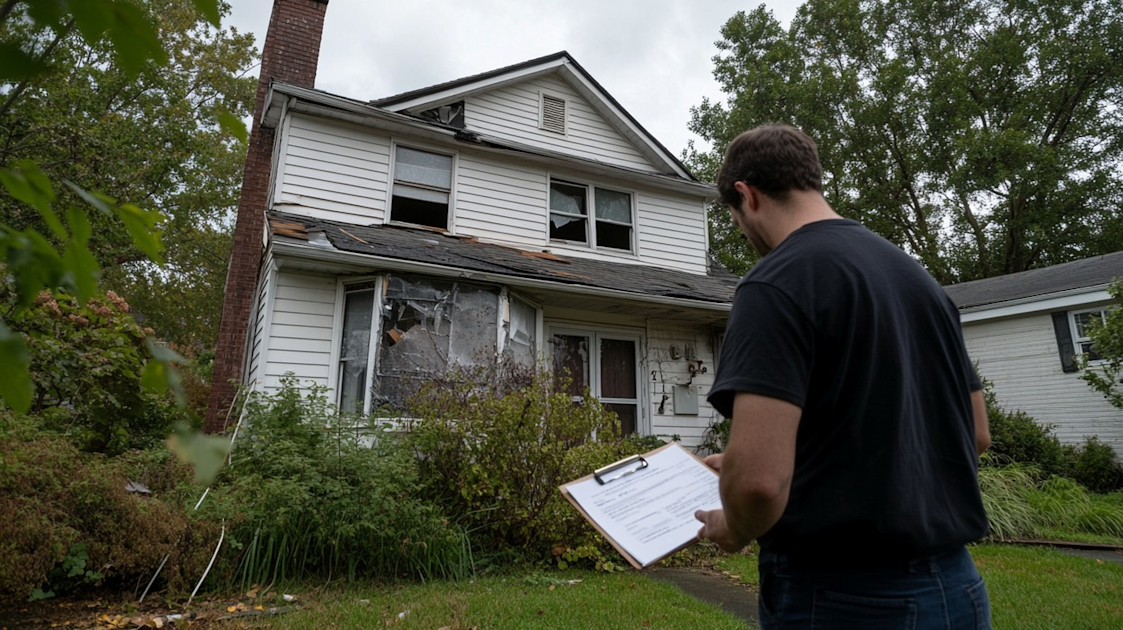


Homeowners insurance usually covers siding damaged by a sudden, accidental event such as fire, a windstorm, a falling tree, a vehicle or vandalism, and usually does not cover damage from wear and tear, rot, insects, poor maintenance or gradual leaks. Earthquake and flood damage are normally excluded unless you carry separate coverage. In California, when a replacement-cost policy pays to replace siding and the new pieces don't match the old in quality, color or size, state regulations require the insurer to replace all items in the damaged area so the result has a reasonably uniform appearance. How far "the damaged area" extends is where most siding disputes happen.
Not legal or insurance advice. This article is general information. Your policy's wording controls what is covered. For a decision about your claim, talk to your insurer or agent, and to an attorney or the California Department of Insurance if there's a dispute.
What's usually covered and what isn't
| Usually covered (sudden, accidental) | Usually not covered | Depends on the policy and facts |
|---|---|---|
| Fire and smoke, including wildfire | Wear and tear, weathering, faded or failed paint | Water damage behind siding (sudden vs long-term) |
| Windstorm damage, such as torn-off boards | Rot, mold and insect damage from long-term moisture | Mold that results from a covered event |
| Trees or branches falling on the house | Settling, cracking and shrinkage | Building code upgrades required during repair |
| Vehicle impact | Damage from neglected maintenance | Matching undamaged walls to repaired ones |
| Vandalism | Earthquake and flood (separate policies) | Damage from a neighbor's property or activity |
Many homeowners policies, including the common HO-3 form, cover the dwelling against any cause that isn't specifically excluded, while others cover only the perils they list. Check the declarations page and the exclusions section of your policy for the actual wording.
Why rot and wear are excluded
Insurance is built to pay for sudden events, not for the slow aging of a house. Dry rot at the bottom of old wood siding, T1-11 delaminating at the drip edge, paint failure from sun and fog, and water damage from a window that has leaked for years are all treated as maintenance. An adjuster who sees long-term staining, soft sheathing and old rot around a fresh storm tear may pay for the storm damage and exclude the rest.
That's one reason to keep records: photos of the siding over time, invoices for painting and repairs, and notes on when problems were fixed. Our guide to preventing dry rot covers the maintenance that keeps siding insurable.
Matching rules and discontinued siding
This is one of the most frustrating siding claim problems. A windstorm damages one wall, but the siding profile was discontinued years ago, or the new boards are a different color after years of sun on the old ones. Patching one wall with something that doesn't match leaves the house looking repaired.
California's Fair Claims Settlement Practices Regulations address this. For policies that settle losses on a replacement-cost basis, 10 CCR Section 2695.9(a)(2) says that when a loss requires replacement and the replaced items don't match in quality, color or size, the insurer must replace all items in the damaged area so the result conforms to a reasonably uniform appearance. The regulation doesn't define "damaged area," so insurer and homeowner may disagree about whether it means a few courses, one wall, or every wall visible together.
Possible ways to resolve a matching problem include:
- Salvage: moving matching boards from a less visible wall, such as a garage side, to the damaged front, and installing new siding on the hidden wall.
- Full elevation: replacing all the siding on the damaged side of the house so the break falls at a corner.
- Whole-house re-side: where nothing comparable exists and the damaged area can't be made uniform any other way.
Before you file, it helps to know whether your siding is still made. Our guide to discontinued siding explains how to identify old products and what your options are when they're gone.
Replacement cost vs actual cash value
The California Department of Insurance explains the difference this way: replacement cost is the amount needed to replace a damaged item with one of similar kind and quality, without deducting for depreciation. Actual cash value pays the current market value, which subtracts depreciation for age and wear. On older siding, the gap can be large.
Many replacement-cost policies pay the actual cash value first and the rest after the work is done. California Insurance Code Section 2051.5 says an insurer can't give you less than 12 months from the first actual cash value payment to collect the full replacement cost, and longer for losses in a declared state of emergency, with extensions for good cause. If the insurer reduces a payment for depreciation or betterment, Section 2695.9(f) requires the basis to be explained to you in writing.
What to do after siding is damaged
- Prevent further damage. Cover open walls with plastic sheeting or plywood. The Department of Insurance warns that policies may not cover ensuing damage if you didn't take reasonable steps to secure the property. Keep receipts for temporary repairs.
- Document everything. Take wide and close-up photos and video of each damaged area before anything is moved, plus photos of undamaged walls to show the existing color and profile. Save a piece of the damaged siding if you can.
- Report the claim to your insurer or agent. Ask about your deductible, whether you'll need contractor estimates, and how long processing should take.
- Keep a log of every call and copies of all correspondence.
- Get a written estimate from a licensed contractor that lists each part of the repair.
Working with the adjuster
California's regulations set timelines and rules that help you understand where a claim stands:
- Acknowledgment: within 15 calendar days of notice of the claim, the insurer must acknowledge it, give you the forms and instructions you need, and begin investigating.
- Decision: within 40 calendar days of receiving proof of claim, the insurer must accept or deny it in whole or in part. If it needs more time, it must tell you in writing and update you every 30 days.
- Your choice of contractor: the insurer can't require you to use a particular contractor.
- The insurer's estimate: if the insurer settles based on its own estimate, it must give you a copy, and the estimate must be enough to restore the property to its condition before the loss. If your contractor's estimate is higher, the insurer must pay the difference, name a contractor who will do the work for its price, or reasonably adjust your contractor's estimate and give you a copy.
When comparing your contractor's estimate with the adjuster's, look for missing items rather than arguing about the total. Siding estimates commonly differ on:
- Removal and disposal of the damaged siding
- Weather-resistive barrier and flashing behind the replaced area
- Trim, corner boards and window casings that have to come off
- Painting the full wall or elevation, not just new boards
- Permit fees and building code upgrades (the Department of Insurance lists code upgrades among things a policy may cover)
- Matching, as described above
Be wary of an early check presented as a full settlement that asks you to release further claims. The Department of Insurance notes that the first check is often an advance, not a final payment.
If you disagree with the settlement
The Department of Insurance suggests these steps, in order: know your rights under the Fair Claims Settlement Practices Regulations, talk to the claims manager, contact the Department (its consumer hotline is 1-800-927-4357, and you can file a Request for Assistance online), and consult an attorney.
Getting a repair estimate
A useful insurance estimate describes the damage and the repair in terms an adjuster can check: square footage by elevation, the existing product and profile, whether it's still made, the replacement product, and every step from tear-off to paint. If you're vetting contractors, our list of questions to ask a siding contractor applies to insurance work too. For smaller damage, our siding repair guide covers what can be patched. When the damage or matching problem points to a larger project, see our siding replacement page. We give a free written estimate after a walkthrough.
Frequently asked questions
Does homeowners insurance cover siding replacement?
It can, when a covered event such as fire, wind, a falling tree or vandalism damaged the siding. It usually doesn't pay to replace siding that has worn out, rotted or failed from lack of maintenance. Your policy wording decides.
Will insurance replace all my siding if only one side is damaged?
Not automatically. California regulations require the insurer to replace all items in the damaged area when replacements don't match in quality, color or size, so the result has a reasonably uniform appearance. Whether that means one wall or more depends on the facts and is often negotiated.
What if my siding has been discontinued?
Discontinued siding is where matching rules matter most. Options include salvaging boards from a hidden wall, replacing a full elevation, or a larger re-side when nothing comparable exists. Document the original product and ask your insurer how it will achieve a uniform appearance.
Does homeowners insurance cover earthquake damage to siding?
Standard homeowners policies generally exclude earthquake damage. Coverage requires a separate earthquake policy, so check whether you have one.
Can I choose my own contractor for an insurance claim?
Yes. California regulations say an insurer can't require you to use a particular contractor. If your contractor's estimate is higher than the insurer's, the insurer must pay the difference, name a contractor who will do the work for its estimate, or reasonably adjust your contractor's estimate.
Sources
- Cornell LII: 10 CCR 2695.9, standards for first-party residential property claims
- Cornell LII: 10 CCR 2695.7, standards for prompt, fair and equitable settlements
- California Department of Insurance: Residential Property Claims Guide (PDF)
- California Insurance Code Section 2051.5: replacement cost time limits
The information provided here is intended for general reference and should not be considered professional advice. Before starting any project, consult a licensed contractor. Product features, specifications, and warranties may have been updated since this was published. Any mention of brands or products reflects personal opinion and does not constitute an endorsement or warranty.


