
How Long James Hardie Siding Lasts and How to Keep It That Way
By Bay Area Siding Company


Share —
James Hardie backs its fiber cement siding with a 30-year non-prorated limited substrate warranty, and a well-installed, maintained Hardie wall can last well beyond that. The board itself doesn't rot and termites don't eat it, so it rarely wears out on its own. What decides how long it lasts is the installation and the upkeep: edges kept clear of soil and roofing, correct flashing, sealed cut ends, sound caulk and a finish that is maintained. The paint and caulk will need attention long before the boards do.
Warranty vs real life at a glance
| Part of the wall | Manufacturer coverage | What wears in real life | What keeps it going |
|---|---|---|---|
| Fiber cement board (substrate) | 30-year limited, non-prorated, transferable | Edges that sit in water or soil, cracked boards from impact or bad nailing | Correct clearances and flashing; replace damaged boards one at a time |
| ColorPlus factory finish | 15-year limited finish warranty (prorated) | Gradual fading and chalking, most on sunny walls; nicks and scrapes | Gentle washing; Hardie touch-up kits; repaint with 100% acrylic when needed |
| Field paint on primed boards | Paint manufacturer's warranty | Fading, chalking, peeling at edges | Quality 100% acrylic; repaint on the paint maker's schedule |
| Caulk at trim, windows and joints | Sealant manufacturer's terms | Cracks and pulls away as the house moves | Inspect yearly; cut out and replace failed sections |
| Flashing and weather barrier | Installer's workmanship | Missing or reversed laps let water behind the siding | Done right at installation; checked at any repair |
What the warranty covers, and what it doesn't
James Hardie's substrate warranty covers siding, trim and soffit for 30 years without proration and transfers to later owners. ColorPlus finishes have a separate 15-year limited finish warranty that addresses peeling, cracking and chipping; its payout is prorated over the term, and normal weathering, fading and chalking are treated differently from finish failure.
Two points matter more than the numbers. First, Hardie's installation instructions state that failing to follow them may affect warranty coverage. A wall installed with the wrong clearances or fasteners can fail early and leave you without a claim. Second, a product warranty does not cover water damage behind the siding. That depends on the flashing and weather barrier, which are the installer's responsibility. Ask for both the product warranty and the contractor's workmanship terms in writing.
James Hardie describes its siding as built to stand up to the elements "for decades." There is no reliable published average lifespan for fiber cement, so be skeptical of anyone who quotes a precise number of years.
What shortens the life of Hardie siding
When fiber cement fails early, it is almost always at an edge or a junction. The common causes:
- No clearance at the bottom. Hardie's HZ10 instructions call for 6 inches between siding and the ground, and at least 1 inch above roofs, decks, paths and steps. Boards run down into soil, mulch or onto a roof wick water into their cut edges, swell and delaminate.
- Missing flashing. Without kick-out flashing where a roof edge meets a wall, water pours behind the siding. Without flashing at butt joints and above windows, water reaches the weather barrier at every joint.
- Unsealed cut ends. Factory edges are sealed. Field cuts must be primed, painted or caulked on primed boards, or treated with ColorPlus edge coaters on prefinished boards.
- Bad nailing. Overdriven nails break the face of the board and can crack it. Hardie requires fasteners driven snug, not countersunk.
- Neglected caulk and paint. Field paint that peels exposes the board, and failed caulk at windows lets water behind the trim.
- Constant wetting. Sprinklers that hit the wall every day, overflowing gutters and downspouts that dump against the siding all keep the bottom courses wet.
- Pressure washing. Hardie advises against pressure washers because they can damage the surface.
Our article on what a correct Hardie installation looks like covers each install detail. If you suspect water is already getting behind your walls, our guide to moisture behind siding explains the signs.
Bay Area conditions that affect Hardie siding
Coastal fog and salt air
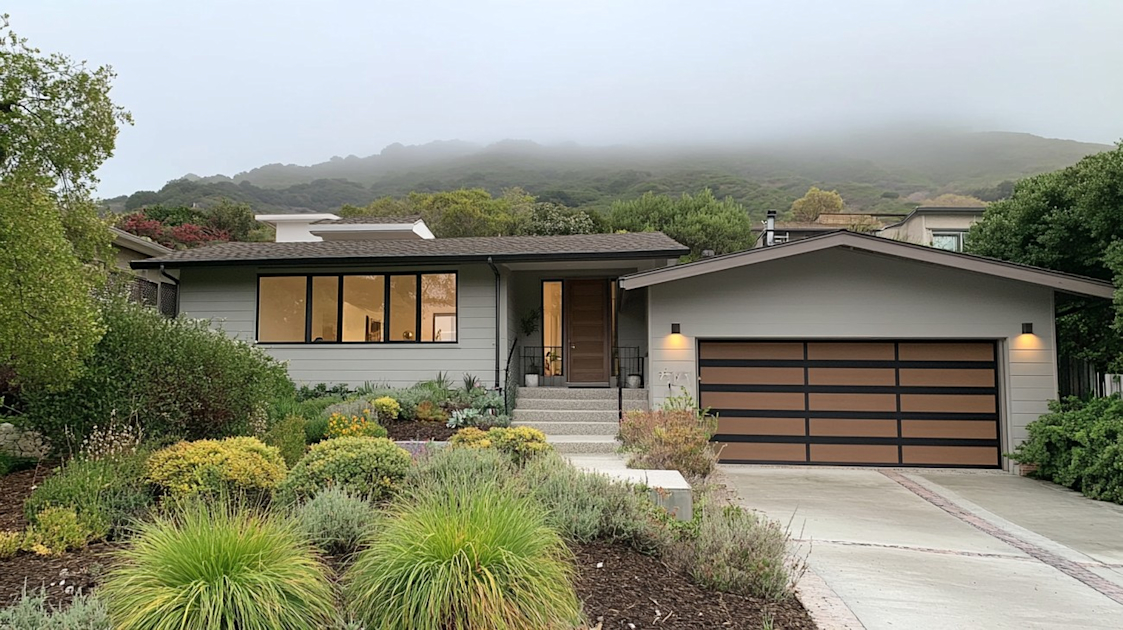
In Pacifica, Half Moon Bay, Sausalito and other fog-belt towns, walls stay damp for long stretches. Fiber cement itself handles constant damp well because it doesn't rot. Our Pacifica Hardie lap siding project is a typical example. What fog does affect is the surface: mildew and algae grow on shaded north walls, and salt film builds up near the ocean. Hardie recommends stainless steel fasteners for installations near the ocean or large bodies of water, so ask about fasteners if you live close to the shore or the Bay. Washing once or twice a year removes salt and keeps growth from staining the finish.
Inland sun and heat
In Concord, Livermore, San Jose and other warm inland areas, south and west walls take most of the UV. Fiber cement doesn't warp or soften in heat, but paint and factory finishes fade fastest on those walls. James Hardie says its ColorPlus finishes resist fading better than typical field-applied paint. On field-painted walls, expect the sunny sides to need repainting before the shaded ones. Our guide to siding paint fading explains why some colors go faster.
Earthquakes and settling
Fiber cement is installed as individual boards, so small building movement is spread across many joints instead of cracking a continuous surface. The caulk at trim and windows is what usually shows movement first. After a noticeable quake, walk the house and look for split caulk lines and gaps at corners.
A maintenance schedule that works
| When | Task |
|---|---|
| Every 6 to 12 months | Rinse the siding with a garden hose and a soft, medium-bristle brush, a small section at a time from the top down. Use a mildew-specific cleaner on mildew; no bleach, acid or pressure washer. |
| Once a year (late summer, before the rains) | Walk the house. Check caulk at windows, doors and trim; look for cracked or loose boards, nail pops and peeling paint; confirm clearances at grade, decks and roofs haven't been buried by soil, mulch or new hardscape. |
| Fall | Clean gutters and check that downspouts discharge away from the walls. Reset sprinklers so they don't spray the siding. |
| As needed | Touch up ColorPlus nicks with the Hardie touch-up kit. Replace any cracked or swollen board rather than patching it. |
| When the finish shows wear | Repaint field-painted walls on the paint manufacturer's schedule. Repaint ColorPlus walls when you are ready to change color or the finish has weathered. |
Touch-up and repainting: ColorPlus vs field paint
ColorPlus
Use James Hardie's ColorPlus touch-up kit for nicks, scrapes and nail heads, and use it sparingly. Hardie's instructions say large damaged areas should be replaced with new ColorPlus boards rather than touched up. Hardie also states that problems caused by third-party touch-up paint are not covered under the ColorPlus finish warranty. When you eventually repaint a ColorPlus wall, Hardie says the surface should be clean and dry, repriming is normally not necessary, and 100% acrylic topcoats are recommended.
Field-painted Hardie
Primed Hardie boards must be painted within 180 days of installation, and Hardie recommends 100% acrylic topcoats. Stain, oil or alkyd paint and powder coating are not to be used on Hardie products. After that, repaint on the paint manufacturer's schedule. Before repainting, wash the walls, replace failed caulk, and seal any cut edges that were exposed during repairs.
Signs your Hardie siding needs attention
- Swelling, flaking or soft edges at the bottom course or where siding meets a roof or deck
- Cracked boards, often near overdriven nails or at impact points
- Gaps opening at butt joints or between siding and trim
- Peeling paint concentrated at cut edges or joints
- Stains below windows or at roof-wall corners, which suggest water getting behind the wall
Most of these can be fixed by replacing individual boards and correcting the detail that caused the problem. A full re-side is rarely needed for fiber cement unless the original installation was wrong across the whole house. Our siding repair guide covers how repairs are scoped. If your walls do need new siding, see our James Hardie siding page.
Frequently asked questions
How long does James Hardie siding last?
James Hardie warrants the substrate for 30 years, non-prorated, and describes the product as built to last for decades. Real life depends on installation and upkeep. A wall with correct clearances, flashing and maintained caulk and paint can outlast the warranty.
Does James Hardie siding need to be painted?
Primed boards must be painted within 180 days of installation and then repainted on a normal schedule. ColorPlus boards come prefinished and don't need painting at installation, though they can be repainted later with 100% acrylic paint.
Can I pressure wash Hardie siding?
James Hardie advises against it because a pressure washer can damage the surface. Use a garden hose and a soft, medium-bristle brush, working from the top down.
Is the James Hardie warranty transferable?
Yes. The 30-year substrate warranty on Hardie siding, trim and soffit is transferable to later owners. Read the current warranty document for conditions, including installation requirements.
Does salt air damage Hardie siding?
Fiber cement itself holds up well on the coast. Salt mainly affects fasteners and the finish. Hardie recommends stainless steel fasteners near the ocean, and regular rinsing keeps salt film from dulling the finish.
Sources
The information provided here is intended for general reference and should not be considered professional advice. Before starting any project, consult a licensed contractor. Product features, specifications, and warranties may have been updated since this was published. Any mention of brands or products reflects personal opinion and does not constitute an endorsement or warranty.